late summer before August 25
Arrival at Butcher’s Crossing
[Will Andrews](entity:character-recall-character-will-andrews-c09818f986ec) arrives by stagecoach at [Butcher’s Crossing](entity:location-recall-location-butcher-s-crossing-b72cab1d4aa2), a dusty frontier settlement of saloons, tents, rough shops, and unfinished wooden buildings. After nearly two weeks traveling west from [Boston](entity:location-recall-location-boston-aded649f4602), he is exhausted but alert to the strange openness of the prairie beyond the village.
He takes a room at the Butcher’s Hotel and rests, discovering how completely the journey has carried him away from his old life. His arrival begins a search for experience that he cannot yet explain or name.
the evening of Andrews’s arrival
A Night in the Hotel
Andrews bathes in a tin tub, eats, and falls asleep in his bare room. Sounds from the village—the voices, boots, and laughter of people below—break into his sleep and make the unfamiliar settlement seem to live inside his head.
The small discomforts of the hotel contrast sharply with the cultivated domestic world he has left behind. He wakes the next morning still a stranger, but ready to seek out the man his father once knew.
the morning after Andrews arrives
McDonald’s Offer
Andrews finds [J.D. McDonald](entity:character-recall-character-j-d-mcdonald-0681b65e2358) in a cluttered office beside the salt vats, buried in hide-trade ledgers. McDonald remembers Andrews’s father, a Unitarian preacher he had met in [Boston](entity:location-recall-location-boston-aded649f4602), and quickly offers the young visitor clerical work in his growing business.
McDonald describes the settlement as a place poised to prosper once the railroad comes through. Andrews declines the job: he did not travel west to speculate on land or build a career, but to understand the country and its people.
the same morning
The Wilderness Beckons
When McDonald warns him away from the hunters, Andrews tries to explain his longing for a life closer to nature. His words fail to capture what he seeks: a freedom and vitality that he believes the ordered world of [Boston](entity:location-recall-location-boston-aded649f4602) has lost.
McDonald reluctantly points him toward [Miller](entity:character-recall-character-miller-29b1df92a6aa), an experienced independent hunter. He asks Andrews to tell him before leaving on any expedition, a request that gives their brief encounter the weight of a personal obligation.
the evening of Andrews’s second day
Meeting Miller and Charley
At [Jackson’s Saloon](entity:location-recall-location-jackson-s-saloon-ec790654cab4), Andrews meets [Miller](entity:character-recall-character-miller-29b1df92a6aa), a formidable hunter, and [Charley Hoge](entity:character-recall-character-charley-hoge-f3b0f9f7972a), a Bible-reading frontiersman whose right hand was amputated after it froze in a [Colorado](entity:location-recall-location-colorado-e0fc68fd7477) blizzard. [Francine](entity:character-recall-character-francine-815ac5e17a5f), a local sex worker, sits with them during their conversation.
Andrews’s education and careful speech amuse Miller, who asks what a Harvard student expects to learn from a man like him. Andrews insists that he wants to know the country for himself, not to write about it or impress anyone back east.
later that evening
Miller’s Hidden Valley
[Miller](entity:character-recall-character-miller-29b1df92a6aa) explains that years earlier, while trapping in [Colorado](entity:location-recall-location-colorado-e0fc68fd7477), he discovered an isolated mountain valley filled with thousands of bison. A hard-packed trail led into the basin, hidden from the river and apparently unknown to other hunters.
He has never returned. The herd may still be there, but finding the valley again will require the right route and a crew he can trust to follow his lead. For Andrews, the story transforms an abstract yearning for wilderness into a real destination.
later that evening
Andrews Joins the Hunt
Andrews asks how many men and how much money an expedition would require. [Miller](entity:character-recall-character-miller-29b1df92a6aa) proposes a small party: himself as hunter, Charley as teamster, a skilled skinner, and Andrews, who would finance the wagon and supplies and learn to skin.
Andrews agrees to contribute six hundred dollars from his inheritance, despite knowing that the expense is nearly half his remaining money. The agreement makes the expedition Miller’s undertaking, but binds Andrews to the journey and its dangers.
the same evening
A Warning from Charley
Charley refuses to join at first, calling the [Colorado](entity:location-recall-location-colorado-e0fc68fd7477) country a place for the devil and recalling the frostbite that cost him his hand. [Miller](entity:character-recall-character-miller-29b1df92a6aa) nevertheless expects him to come, because Charley is the best teamster he knows.
Miller lays out the expedition’s costs and promises to acquire a wagon, oxen, provisions, a horse, and a rifle. His confidence helps Andrews commit, though the account of Charley’s injury hints at the brutal physical price of frontier life.
a few days before the expedition leaves
Andrews Rejects Francine
While [Miller](entity:character-recall-character-miller-29b1df92a6aa) is away buying supplies, Andrews spends much of his time alone, watching the prairie and trying to understand his attraction to the open country. He talks with [Francine](entity:character-recall-character-francine-815ac5e17a5f) during a morning walk and finds himself responding to her gentleness rather than to the role the settlement assigns her.
When Francine invites him to her room and offers to make love with him, Andrews initially responds with desire and compassion. But the thought of the many men who have shared her body overwhelms him, and he flees, ashamed and unable to explain his reaction to her or himself.
six days after Miller leaves for Ellsworth
Miller Returns with the Outfit
[Miller](entity:character-recall-character-miller-29b1df92a6aa) returns to [Butcher’s Crossing](entity:location-recall-location-butcher-s-crossing-b72cab1d4aa2) with an enormous wagon, a team of oxen, and a spare horse. Charley tells Andrews that the preparations are complete and that Miller wants the party to meet at [Jackson’s Saloon](entity:location-recall-location-jackson-s-saloon-ec790654cab4).
The wagon and its slow, powerful team make the expedition tangible. Andrews is no longer considering an idea: he is about to leave the settlement and enter country where Miller’s experience will be his only guide.
three or four days before departure
Schneider Joins Reluctantly
[Miller](entity:character-recall-character-miller-29b1df92a6aa) introduces [Fred Schneider](entity:character-recall-character-fred-schneider-cd5d8e8ac022), his chosen skinner, and reveals that the expedition will cross the plains to [Colorado](entity:location-recall-location-colorado-e0fc68fd7477) rather than hunt nearby. Schneider objects to the long, uncertain journey and demands a fixed monthly wage instead of a share of the profits.
Miller persuades him with the prospect of a large winter-skin harvest. Schneider accepts, but his blunt skepticism immediately contrasts with Miller’s certainty and Andrews’s eagerness.
the days before August 25
The Final Preparations
[Miller](entity:character-recall-character-miller-29b1df92a6aa) assigns Andrews the task of getting proper clothes and arranges the remaining equipment. Schneider’s crude attempt to proposition [Francine](entity:character-recall-character-francine-815ac5e17a5f) angers Andrews, whose feelings about her remain tangled with the shame of his earlier retreat.
Francine later waits for Andrews outside the saloon and invites him upstairs. He follows her to her room, but the moment ends without their resolving what happened between them. Their unfinished connection will accompany him into the wilderness.
August 25, before sunrise
Departure at Dawn
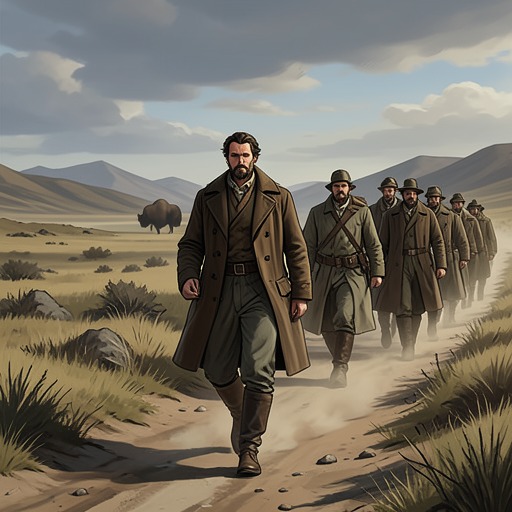
The four men meet behind the stables and set out with a wagon loaded for six weeks. Charley takes the driver’s seat; [Miller](entity:character-recall-character-miller-29b1df92a6aa) leads on horseback, with Schneider and Andrews behind him.
They leave [Butcher’s Crossing](entity:location-recall-location-butcher-s-crossing-b72cab1d4aa2) in darkness, cross the small river, and turn west across open prairie. Andrews looks back at the village as it recedes, beginning the long passage from settlement into the unmarked country he has come to experience.
August 25
The First Day’s Hardship
The party crosses open [Kansas](entity:location-recall-location-kansas-de2a58274d0b) under a punishing sun. Andrews has little riding experience, and the saddle quickly chafes his thighs and leaves his body aching; the wagon and oxen move slowly behind the horsemen.
At Smoky Hill, the animals drink and rest. Andrews begins to understand that the journey will be measured less by dramatic discoveries than by repeated labor, discomfort, and the daily care of the animals.
the first days west of Butcher’s Crossing
The Bison’s Old Road
Following the [Smoky Hill Trail](entity:location-recall-location-smoky-hill-trail-d9e4e6be6d4f), the expedition passes an abandoned homestead and the remains of an earlier bison crossing. [Miller](entity:character-recall-character-miller-29b1df92a6aa) explains that great herds once moved to the river along such broad, compacted paths.
The trail reveals the scale of the animals’ former presence even as the landscape shows how quickly that presence is disappearing. Andrews sees bones, wallows, and scattered herds, while Miller remembers a [Kansas](entity:location-recall-location-kansas-de2a58274d0b) where bison once covered the plains.
during the first week westward
The Plains’ Passing Travelers
The expedition passes a struggling family traveling west and a guarded group of men bound for [Colorado](entity:location-recall-location-colorado-e0fc68fd7477). [Miller](entity:character-recall-character-miller-29b1df92a6aa) advises the family to turn toward Fort Wallace because their injured mule will not last, but the father refuses to change course.
They also pass a small encampment of Indigenous people near the river. Miller dismisses them contemptuously. These brief encounters expose the many lives crossing the plains, even as Andrews grows increasingly absorbed in the journey’s repetitive isolation.
the sixth day of the journey
The End of the Trail
At the end of the [Smoky Hill Trail](entity:location-recall-location-smoky-hill-trail-d9e4e6be6d4f), [Miller](entity:character-recall-character-miller-29b1df92a6aa) rejects the safer route that follows the river toward Arkansas. He claims he knows where water can be found across the open country and argues that the shorter route will save a week.
Schneider challenges the plan, aware that the animals may suffer if Miller is wrong. Andrews admits that he has no knowledge of the terrain and sides with Miller, placing his trust in the guide whose confidence brought the expedition this far.
the first night beyond the Smoky Hill Trail
The Water Runs Low
[Miller](entity:character-recall-character-miller-29b1df92a6aa) leads the party away from the river and into the dry plains. They carry only a limited reserve of water in a makeshift canvas container, and the first night ends with the animals already dependent on that supply.
Schneider openly questions Miller’s directions. Miller insists that water lies ahead, but his uncertainty becomes visible to the others, turning a confident shortcut into a dangerous test of leadership.
the following day
Lost in the Dry Country
After a long, hot march, [Miller](entity:character-recall-character-miller-29b1df92a6aa) cannot identify the expected landmarks. Schneider says the party is lost and urges a turn toward Arkansas, where water should be more dependable.
Miller argues that the animals could not make the return journey in their weakened state and insists that he will find water. Andrews chooses to stay with him, accepting the risk because he has already committed himself to the expedition and its leader.
the next day and night
The Search for Water
The men ration what remains, wetting the oxen’s swollen tongues with a damp cloth rather than letting them drink freely. Their own mouths crack and dry as the party pushes onward through empty country, with [Miller](entity:character-recall-character-miller-29b1df92a6aa) refusing to abandon the wagon or its ammunition.
At dawn, the animals sense water before the men see it. Miller recognizes the signs and drives the exhausted party toward a narrow stream, where the horses and oxen rush to drink and the men finally wet their mouths.
the fourteenth day of the journey
The Mountains Appear
After days of crossing featureless plains, Andrews wakes to see a dark line of mountains on the western horizon. [Miller](entity:character-recall-character-miller-29b1df92a6aa) has expected them, but to Andrews they promise a kind of fulfillment he cannot define.
The party also reaches the railroad line advancing across the country. Miller is astonished by its arrival; Schneider sees it as evidence that the era of immense bison herds is already passing. The railway foreshadows the commercial changes that will eventually make their hunt worthless.
about two weeks after departure
Entering the Mountain Country
The party follows streams into the foothills and begins searching for [Miller](entity:character-recall-character-miller-29b1df92a6aa)’s remembered route. The landscape grows wooded and steep, and Miller admits that familiar landmarks seem changed.
Andrews sits by the river and looks into the vast pine forest, which seems to him like a motionless sea. Miller searches along the water, increasingly uneasy as the country refuses to match his memories.
the morning after reaching the foothills
The Hidden Trail
[Miller](entity:character-recall-character-miller-29b1df92a6aa) finally recognizes the place where bison have worn a broad trail through stone and forest. He orders Charley to turn the wagon across the river and leads the others into the trees.
The trail is not an ordinary road but the compressed passage of generations of migrating animals. Its discovery confirms Miller’s account and brings the party to the hidden valley he has pursued for years.
later that day
The Climb and the Valley
The wagon labors up the steep mountain track, with the men pushing at its wheels. Andrews, exhilarated by the climb, overexerts himself and faints before learning to pace himself in the thin air.
At the pass, the forest opens onto a long, grassy basin enclosed by mountains. A vast dark mass of bison moves through the valley below. [Miller](entity:character-recall-character-miller-29b1df92a6aa) has found the herd he remembered, and the expedition’s purpose becomes real.
the first evening in the valley
The Hunting Camp
The party camps beside a spring and prepares a base near the bison’s watering place. They protect the wagon’s gunpowder from damp, gather firewood, and organize the tools needed to process the hides.
[Miller](entity:character-recall-character-miller-29b1df92a6aa) casts bullets and loads cartridges by hand while Schneider teaches Andrews how to sharpen the specialized skinning knives. The work establishes the routines that will soon turn the valley into a killing ground.
the first morning of hunting
Miller’s First Shot
[Miller](entity:character-recall-character-miller-29b1df92a6aa) leads Andrews and Schneider toward the herd, explaining how wind, position, and the dominant bull affect a hunt. He shoots the scarred leader, which walks a short distance before collapsing, and the herd briefly scatters.
Miller then uses the confusion to draw closer and begin shooting again. Andrews watches the animals’ fear and the hunter’s practiced method, caught between fascination with the wilderness and the violence required to exploit it.
the first day of the hunt
The First Great Kill
[Miller](entity:character-recall-character-miller-29b1df92a6aa) keeps the herd moving in a tight circuit, shooting one bison after another while Andrews retrieves ammunition, carries water, and cools the rifle. The gunfire continues for hours, and the valley fills with smoke, dead animals, and the sound of hooves.
Schneider warns that the party cannot skin more animals than it can process, but Miller refuses to stop. By midafternoon he has killed 135 bison, a result that astonishes Andrews and sets the expedition on a scale its laborers cannot easily sustain.
the evening after the first hunt
Andrews Learns to Skin
Schneider demonstrates how to remove a hide quickly, then leaves Andrews to try the work. Andrews cuts poorly, tears his first hides, and is sent to butcher a young bison for meat while the experienced skinners handle the main pile.
The task of opening the carcass overwhelms him. He vomits at the sight and smell of the entrails, while [Miller and Schneider](entity:relation-recall-relation-miller-and-schneider-84a0ca9cc2e2) eat raw liver. Andrews recognizes that the hunt’s abstract grandeur is inseparable from blood, labor, and the reduction of living animals to usable material.
the first weeks in the valley
The Bison Hunt Becomes Routine
Andrews gradually becomes faster and more capable at skinning. The smell of blood and decaying carcasses loses its power to repel him, and his hands learn the repeated motions until he can work almost mechanically.
He also tries [Miller](entity:character-recall-character-miller-29b1df92a6aa)’s rifle and kills several bison himself. The experience does not provide a clear revelation; instead, Andrews struggles to understand what he felt as the animals fell, while the expedition’s daily work increasingly replaces reflection.
the second week in the valley
The Slaughter Expands
The hunters push the herd farther down the basin, killing and skinning more animals while Charley periodically hauls dried hides back to camp. Andrews’s competence grows, but the scale of the carcasses and the absence of any visible reduction in the herd make the work feel endless.
The four men become isolated from one another, speaking mostly about hunting. [Miller](entity:character-recall-character-miller-29b1df92a6aa) grows more withdrawn and intense, while the bodies of the bison and the growing stacks of hides dominate the valley.
near the end of the second week
Schneider Demands to Leave
Schneider, sick of bison meat and the relentless work, insists that the expedition should leave. He points out that they have more hides than they can carry and that autumn weather is becoming dangerous.
[Miller](entity:character-recall-character-miller-29b1df92a6aa) refuses. He intends to kill the entire herd, and his insistence reveals an obsession that has displaced the practical limits of the expedition. Andrews understands, without being able to say why, that Miller will not leave while a bison remains alive.
the following days
Miller’s Obsession
The killing continues as the bison press toward the mountain pass and [Miller](entity:character-recall-character-miller-29b1df92a6aa) drives them back into the valley. He becomes almost silent outside the hunt, communicating through abrupt gestures, while Schneider and Andrews struggle to keep up with the daily skinning.
The herd shrinks to a fraction of its former size. Andrews realizes that the valley has become his whole world and that he has ceased to imagine the route back to [Butcher’s Crossing](entity:location-recall-location-butcher-s-crossing-b72cab1d4aa2). The expedition’s commercial purpose is giving way to Miller’s determination to finish what he began.
the twenty-fifth day of hunting
The Herd Breaks for the Pass
As the valley’s grass dries and the surviving bison gather near their route of escape, [Miller](entity:character-recall-character-miller-29b1df92a6aa)’s hunt becomes less productive. The remaining animals split into smaller groups and begin trying to leave the basin.
Miller sends Andrews and Schneider to block their routes while he takes the center. Several herds charge, and the three hunters fire to turn them back. Andrews witnesses the animals moving with a collective force that seems almost like a single mind.
later that afternoon
Snow Begins to Fall
After the last charges are driven back, Schneider senses that something is wrong. Snow begins falling over the valley, surprising Andrews but terrifying Charley, who had trusted [Miller](entity:character-recall-character-miller-29b1df92a6aa)’s promise that the expedition would finish before winter.
Miller orders the party back to camp. The snowfall thickens rapidly, and the weather turns their hunt into an emergency before they can collect the scattered hides or reach the mountain pass.
the first hours of the blizzard
The Wagon Is Abandoned
The blizzard erases the route and makes it impossible to move the wagon safely. [Miller](entity:character-recall-character-miller-29b1df92a6aa) orders Andrews to hold the horses while he and Schneider release the oxen; in the confusion the horses bolt, dragging Andrews through the snow before he manages to stop them.
Lost in the whiteout, Andrews searches by touch and fading tracks until he hears a shout and finds the others. Miller then guides the group through the storm toward camp, riding with the nearly catatonic Charley behind him.
the first night of the blizzard
Shelter from Bison Hides
The men reach camp to find hides scattered and buried by snow. [Miller](entity:character-recall-character-miller-29b1df92a6aa) constructs crude hide shelters to protect Charley and Andrews, while Schneider refuses to share a shelter and insists on surviving alone.
Andrews crawls into his shelter among the rancid bison skins as wind and snow press in around him. The hides that once represented the expedition’s profit now become the only protection between the men and the storm.
the next two days and three nights
The Storm Buries the Camp
For two days and three nights, the storm covers the camp and traps the men beneath the snow. Andrews sleeps in fragments, keeping warm in the cramped hide shelter and emerging only when necessity forces him into the freezing darkness.
During the storm, his thoughts drift toward [Boston](entity:location-recall-location-boston-aded649f4602) and [Francine](entity:character-recall-character-francine-815ac5e17a5f), but both seem remote and unreal. His survival narrows to the body’s simplest needs: warmth, breath, and the possibility of waking again.
the morning after the storm ends
Emerging into the White Valley
Andrews claws his way out of the shelter into a transformed valley buried under deep, dazzling snow. [Miller and Schneider](entity:relation-recall-relation-miller-and-schneider-84a0ca9cc2e2) also emerge alive, though Charley is disoriented and unable to understand where he is.
The pass is blocked by enormous drifts, and [Miller](entity:character-recall-character-miller-29b1df92a6aa) confirms that the party cannot leave. The hunters who came for a short expedition are now trapped in the mountains until spring, with the wagon, most supplies, and their intended profits lost or buried.
the first days after the blizzard
Building the Winter Shelter
[Miller](entity:character-recall-character-miller-29b1df92a6aa) gathers hides and pine branches while Andrews prepares the little food they can salvage. The men build a sturdy shelter of logs, bison skins, earth, and snow, sealing its edges against the cold.
They make crude snowshoes, eye shields, boots, and warmer coverings from the remaining hides. Their practical ingenuity keeps them alive, but every improvement is built from the remains of the animals they have slaughtered.
winter in the valley
A Winter of Isolation
The men spend the winter gathering wood, hunting what game they can find, and enduring long spells of cold and silence. Charley grows increasingly detached, relying on whisky and his Bible; Schneider withdraws from the others and sometimes speaks to himself.
[Miller](entity:character-recall-character-miller-29b1df92a6aa), by contrast, seems to grow stronger in the wilderness, hunting and working with a calm that makes him appear to belong to the landscape. Andrews watches the men and cannot recover a stable image of himself, deepening his sense that identity can dissolve in isolation.
during the winter
Andrews Is Blinded by Snow
On a bright day, Andrews walks away from camp without wearing the hide eye shields. The glare from the snow burns his eyes until he can see nothing but white, and he crawls through the valley trying to find his way back.
Schneider guides him into the shelter, where Andrews remains in darkness for nearly three days while his sight recovers. The episode makes the valley’s beauty feel as dangerous and indifferent as its storms.
during the winter
Charley Loses His Bible
Charley suddenly realizes that his Bible is buried in the snow and searches for it in growing panic. Andrews helps him until they find the book, soaked and frozen, and Charley spends hours drying its damaged pages beside the fire.
The recovered Bible gives Charley a fragile point of continuity, but it cannot restore his composure or memory. His faith persists even as his grasp on the expedition’s shared reality weakens.
late March and early April
The Spring Thaw
The weather steadies, and snow slowly recedes from the valley. New grass rises through the old, while deer, quail, and other game return in greater numbers; the men regain some strength from fresh food.
Schneider repeatedly scouts the pass, eager to leave, but [Miller](entity:character-recall-character-miller-29b1df92a6aa) refuses to move while the snow remains dangerous. The thaw restores the possibility of escape without ending the tension between Miller’s attachment to the valley and the others’ desire to go home.
late April
The Pass Opens
Schneider reports that he has crossed the pass on foot, but [Miller](entity:character-recall-character-miller-29b1df92a6aa) judges the deep, wet snow too dangerous for the wagon and oxen. He makes the party wait until the route can be taken without risking another avalanche.
At last, Miller announces that they will load the wagon and depart the next morning. Andrews feels an unexpected sadness at leaving the valley, sensing that he is abandoning something important even though he cannot define what it is.
the morning after Miller announces their departure
Loading the Hides
The men load as many heavy bales as they can onto the wagon, stacking them dangerously high. [Miller](entity:character-recall-character-miller-29b1df92a6aa) wants to return to [Butcher’s Crossing](entity:location-recall-location-butcher-s-crossing-b72cab1d4aa2) with a substantial haul, while Schneider warns that the overloaded wagon may not survive the descent.
About forty bales remain behind, representing thousands of hides and the promise of a later return. The expedition leaves the camp, carrying the product of months of killing and the burden of Miller’s ambition down the mountain.
late April, during the descent
Leaving the Valley
The party descends the steep trail slowly, bracing the wagon with ropes so its high load will not overturn. At the pass, Andrews looks back over the green valley, remembering the massacre and the winter storm that transformed it.
The landscape seems newly alive in spring, yet the remains of the slaughter are still visible below. Andrews leaves with the sense that the valley has shaped him, though he cannot yet say what he has learned there.
the final day of the descent
The Spring River Crossing
The party reaches a river swollen by snowmelt. Andrews crosses first and finds a route that seems safe; Charley guides the oxen while [Miller](entity:character-recall-character-miller-29b1df92a6aa) leads from horseback, and Schneider follows upstream of the wagon.
A large log strikes Schneider’s horse, overturning it and crushing him in the current. The log and horse slam into the wagon, which capsizes; the oxen, wagon, and entire hide cargo are swept away. Miller tells Andrews that Schneider is already dead and that there is nothing they can do.
immediately after the river disaster
The Loss of the Expedition
Andrews wants to search for Schneider and retrieve his hat, but [Miller](entity:character-recall-character-miller-29b1df92a6aa) insists that the current has made rescue impossible. Charley declares Schneider’s death a judgment for his sins, retreating into religious explanation as Andrews reels from the sudden loss.
The survivors leave the river with nothing from the expedition’s main investment. Months of labor, the wagon, the oxen, and the hides have vanished in minutes, leaving Miller and Andrews with only their horses and the memory of the dead man.
late May, ten days after leaving the mountains
The Return to Butcher’s Crossing
[Miller](entity:character-recall-character-miller-29b1df92a6aa), Andrews, and Charley return along the [Smoky Hill Trail](entity:location-recall-location-smoky-hill-trail-d9e4e6be6d4f), exhausted and traveling on two horses. Charley sits behind Miller, largely unresponsive, while Andrews recognizes the river and the settlement they had left months earlier.
The village appears diminished and half asleep. The survivors find abandoned buildings, neglected businesses, and piles of hides, signs that [Butcher’s Crossing](entity:location-recall-location-butcher-s-crossing-b72cab1d4aa2) has changed while they were gone.
the afternoon of their return
McDonald’s Empty Office
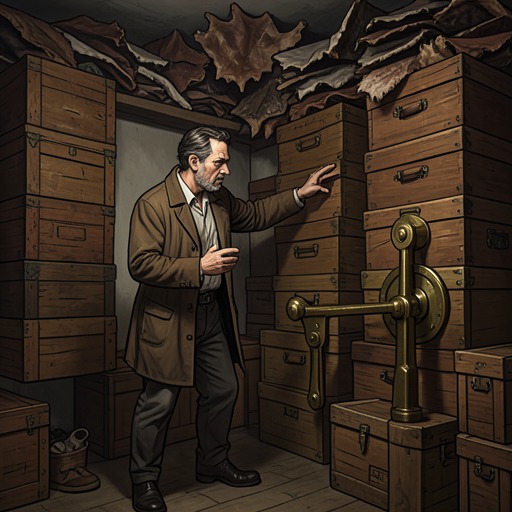
[Miller](entity:character-recall-character-miller-29b1df92a6aa) leads Andrews to [J.D. McDonald](entity:character-recall-character-j-d-mcdonald-0681b65e2358)’s office, expecting to settle their agreement for the hides. The office is deserted and its papers lie scattered under dust; the salt vats and surrounding wagons suggest that McDonald has been gone for a long time.
Miller grows alarmed at the sight, while Andrews realizes the settlement’s trade has collapsed. They return to the village and learn that even the hotel and saloon are being run by strangers who know little of the old business.
the evening of their return
Finding McDonald
The survivors locate McDonald in a nearly empty bunkhouse behind the saloon. He is startled to see them alive and learns that Schneider drowned, the wagon was lost, and [Miller](entity:character-recall-character-miller-29b1df92a6aa) brought back no hides.
Miller counters that thousands of winter hides remain hidden in the mountains. McDonald warns that the market has collapsed and that the hides are now worth almost nothing. The commercial promise that financed the expedition has disappeared while the men were trapped in the valley.
the same evening
The Hide Market Collapses
McDonald explains that the demand for bison hides has vanished, just as fashion once destroyed the beaver trade. His own inventory and land have become liabilities, and he is effectively bankrupt; the railroad has also chosen a route fifty miles north rather than through [Butcher’s Crossing](entity:location-recall-location-butcher-s-crossing-b72cab1d4aa2).
[Miller](entity:character-recall-character-miller-29b1df92a6aa) accuses McDonald of breaking their agreement, but McDonald insists that the failure of the trade has ruined them both. He blames the hunters for flooding the market and destroying the resource on which their livelihoods depended.
after Miller leaves the bunkhouse
McDonald’s Lesson
Andrews stays behind to speak with McDonald, who tells him that people live by successive lies and often recognize the emptiness beneath their dreams only when it is too late. The expedition, McDonald argues, has left Andrews with a wasted year, a dead companion, and no material reward.
Andrews rejects the idea that nothing remains, but cannot explain what the journey has given him. McDonald invites him to leave the country together and return east; Andrews does not accept, saying he has not yet decided what comes next.
late on the night of his return
Andrews Reunites with Francine
After leaving McDonald, Andrews climbs the stairs to [Francine](entity:character-recall-character-francine-815ac5e17a5f)’s room. She had believed he was dead, and the sight of him alive brings relief mixed with sorrow; she notices his darkened face and hardened hands.
Andrews apologizes for fleeing her before the expedition and tells her that his retreat was his own failure, not hers. Francine accepts his explanation and asks him not to leave again. This time he stays with her, changed by the long absence and no longer able to pretend that intimacy is simply a question of shame.
the five days after Andrews returns
Five Days in Francine’s Room
Andrews remains with [Francine](entity:character-recall-character-francine-815ac5e17a5f) in the dim room, losing track of day and night as they repeatedly seek comfort in one another. He begins by surrendering to physical need, then gradually watches Francine more attentively and considers her as a person separate from his own desires.
Outside the room, the village is quiet and its old trade is gone. Andrews occasionally wanders through the streets and sees Charley at [Jackson’s Saloon](entity:location-recall-location-jackson-s-saloon-ec790654cab4), but the man does not recognize him or remember the expedition clearly.
near the end of Andrews’s five days with Francine
Charley’s Lost Memory
Andrews finds Charley drinking alone at [Jackson’s Saloon](entity:location-recall-location-jackson-s-saloon-ec790654cab4) and asks about [Miller](entity:character-recall-character-miller-29b1df92a6aa) and the lost expedition. Charley speaks as if they are preparing for a future bison hunt, naming Schneider as the skinner and claiming that no one ever dies.
Andrews realizes that Charley has lost the memory of the expedition and of Schneider’s death. The blankness in Charley’s eyes terrifies him because it resembles the emotional emptiness he has glimpsed in all of them, including himself.
the night after Andrews confronts Charley
The Fire in McDonald’s Yard
Andrews wakes to shouting and discovers that a fire has engulfed McDonald’s office and the surrounding piles of hides. Villagers gather without intervening as [Miller](entity:character-recall-character-miller-29b1df92a6aa) appears on horseback, driving bales into the flames and risking his own life to feed the blaze.
Andrews understands that Miller has set the fire deliberately. McDonald arrives in horror, unable to stop the destruction of the hides he once owned, while Charley watches the burning with a vacant, almost ecstatic intensity.
the same night
Miller Burns the Hides
[Miller](entity:character-recall-character-miller-29b1df92a6aa) hauls more bales into the fire and even sends an abandoned wagon crashing into the blaze with its load. McDonald lunges at him, but Miller evades his blows; their brief pursuit ends with McDonald standing helpless as his stock and business disappear.
Andrews sees the act as the final expression of Miller’s will after the market has made the expedition’s labor meaningless. Miller has destroyed the hides rather than accept their worthlessness, turning the fire into both an act of defiance and the last consequence of his obsession.
near dawn after the fire
The Survivors Part Ways
As the blaze dwindles, [Miller](entity:character-recall-character-miller-29b1df92a6aa) rides away into the dark, and Charley follows him. McDonald also leaves, having lost his remaining property and any faith that he can rebuild his business in the settlement.
Andrews stays alone beside the smoking ruins, recalling the four men and the different forms of emptiness that have overtaken them. The expedition has ended not with a reckoning or a clear lesson, but with each survivor moving toward an uncertain future.
the morning after the fire
Andrews Leaves Butcher’s Crossing
At dawn, Andrews watches [Francine](entity:character-recall-character-francine-815ac5e17a5f) sleeping and sees her without the idealized pity or desire that had shaped his earlier view of her. He leaves money for her, takes his bedroll, and quietly departs without waking her.
He rides out past the burned office and crosses the stream into the prairie. Andrews does not know his destination, only that he will choose a direction as the day unfolds. His departure closes the journey without restoring the old life or offering a new certainty.